Getting started
How your data flows
Where your cost data goes each night, from two scoped Azure roles to the warehouse, and why nothing writes back.
Infralign reads your Azure estate once a night and writes nothing back.
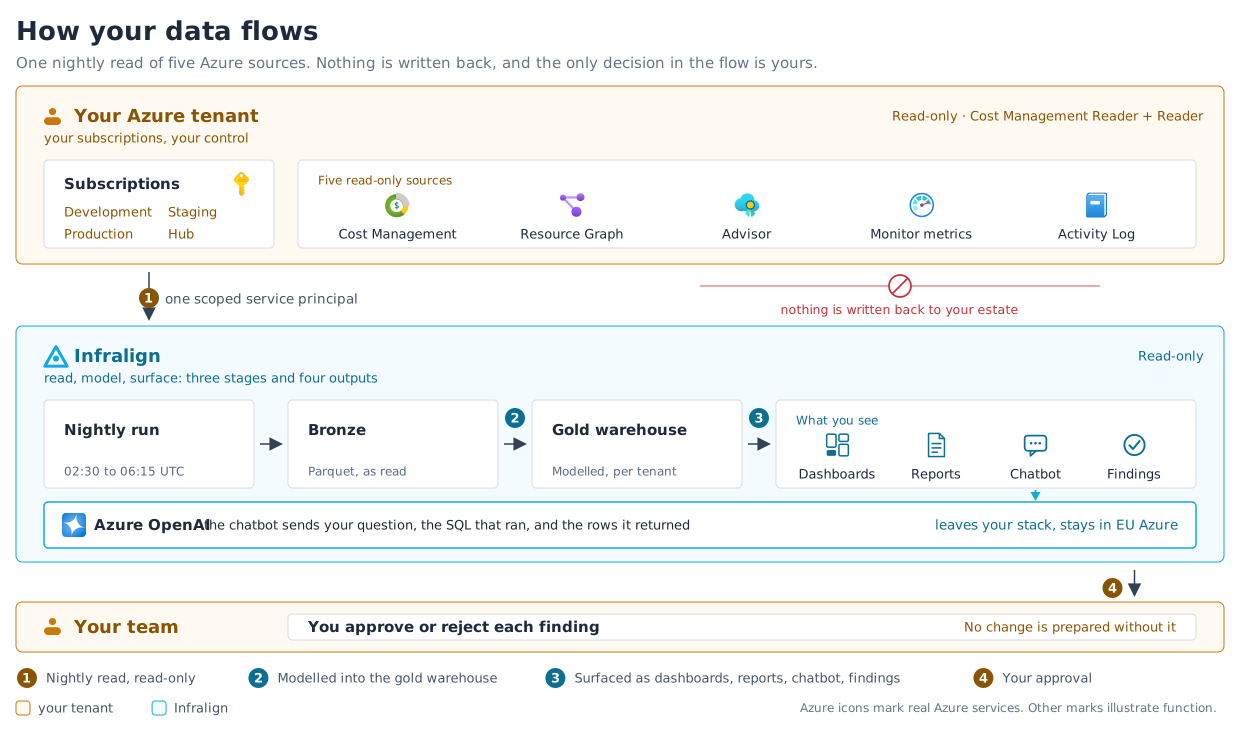
A service principal with the two read-only roles pulls cost and resource metadata into a warehouse, which feeds dashboards, reports, the chatbot, and findings. Figure 1 shows that path.
The three bands
Section titled “The three bands”| Part of the diagram | What it is |
|---|---|
| Top band | Your Azure estate. One service principal, holding the two read-only roles at management group or subscription scope, reads five gated sources across every subscription you pick. Data sources lists every source, endpoint, and role. |
| Middle band | Infralign. The nightly run, 02:30 to 06:15 (UTC). What is read lands as bronze parquet, then is shaped into a gold warehouse. Dashboards, reports, chatbot, and findings all build from gold. |
| Bottom band | Your team. You approve or reject each finding, and no change is prepared without that step. |
| The cyan hop | The chatbot’s model call. It leaves your dedicated stack for Azure OpenAI and stays inside EU Azure, carrying your question, the SQL that ran, and the rows it returned. It is the only outbound hop in the figure. Isolation and data handling covers what it does and does not send. |
Not drawn, because it is off unless you turn it on: the optional FOCUS export lane for estates that outgrow the nightly window, which joins bronze instead of the daily Cost Details API and adds a third role. See FOCUS exports and storage setup.
No arrow points back: the flow cannot create, modify, or delete a resource, tag, or export. To revoke collection access, remove every role assignment held by the Infralign application at your scope, then disable or delete the application; collection stops within about 10 minutes. Ending the connection owns that procedure, including how many roles there are to remove and why the order matters.
Where your data lands
Section titled “Where your data lands”The nightly run copies your billing and resource metadata into Infralign’s warehouse in Microsoft Azure, EU regions, with disaster recovery in a second EU region. Each tenant gets its own isolated databases, and data is encrypted in transit with TLS and at rest on Azure-managed storage.
Metadata only. Never credentials, and never data inside your resources. Security at Infralign states the residency position, and isolation and data handling covers isolation and the chatbot boundary.
Next: Dashboards. The four persona dashboards the gold warehouse feeds.